
Your backyard holds untapped potential. Whether you’ve got a sprawling suburban lot or a modest urban patch, the right landscaped backyard design transforms outdoor space into something you’ll actually use, not just look at from the kitchen window. Landscaping doesn’t require deep pockets or architectural credentials: it’s about understanding what works for your climate, your lifestyle, and your soil. In 2026, the trend isn’t toward Instagram-perfect yards that demand constant upkeep. Instead, homeowners are building practical, beautiful spaces that balance curb appeal with livability. This guide covers 25 proven landscaped backyard ideas, from no-fuss ground covers to premium hardscaping, so you can pick what fits your needs and get started today.
Table of Contents
ToggleKey Takeaways
- Landscaped backyard ideas thrive on low-maintenance native plants, mulch layers, and drip irrigation systems that reduce watering by 50% and eliminate constant upkeep.
- Creating distinct outdoor living zones for dining, lounging, and gathering transforms your backyard from decoration into functional territory you’ll actually use year-round.
- Hardscaping fundamentals—patios, pathways, retaining walls, and pergolas—provide the structural backbone that defines space and enables practical outdoor living.
- Water features like solar fountains or small ponds add visual and auditory interest without requiring expensive installations or complex pond systems.
- DIY installation of landscaped backyard projects saves 60–70% compared to hiring contractors, especially for planting, mulching, and basic paver work.
- Smart material sourcing—buying mulch from local suppliers, choosing smaller shrubs, and repurposing salvaged materials—builds beautiful yards on budget-friendly terms.
Low-Maintenance Landscape Designs for Busy Homeowners
Let’s be honest: most of us don’t have time to babysit a yard. Low-maintenance landscaping starts with plant selection. Native plants adapted to your hardiness zone require less water, fertilizer, and pest management once established. Ornamental grasses, sedums, and drought-tolerant shrubs like Russian sage handle heat and poor soil without fussing. Pair these with a solid mulch layer, 2 to 3 inches deep, to suppress weeds, retain soil moisture, and regulate temperature.
Hardscaping backbone matters just as much. Gravel or permeable pavers reduce mowing and watering zones. Raised beds with quality soil keep weeds down and make planting foolproof. If you’re starting from scratch, consider a basic perennial border with defined edges and a consistent watering plan rather than scattered plantings that demand individualized care.
Automation helps. A simple drip irrigation system on a timer waters deep, slow, and only where needed, cutting water waste by 50% compared to sprinklers. Install it in spring so plants establish strong root systems before summer heat hits. Ground covers like creeping thyme or sedge replace grass in shady spots, eliminating mowing entirely. The upfront effort pays dividends within two seasons.
Creating Outdoor Living Spaces That Maximize Your Backyard
An outdoor living space transforms your yard from decoration into functional territory. This means thinking about how you actually spend time there: grilling, dining, lounging, or gathering with neighbors.
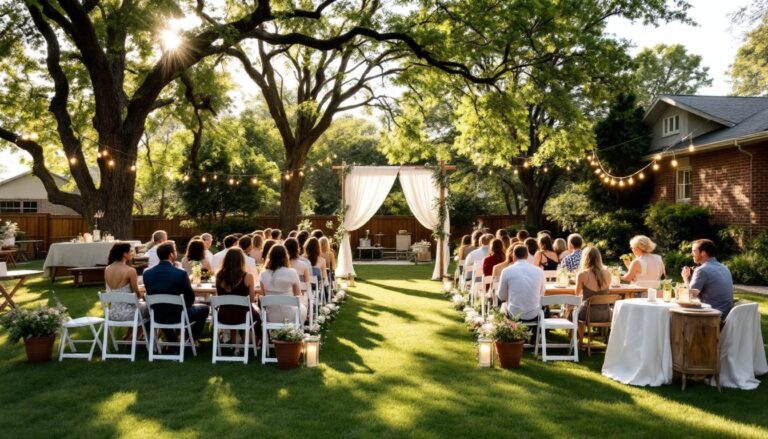
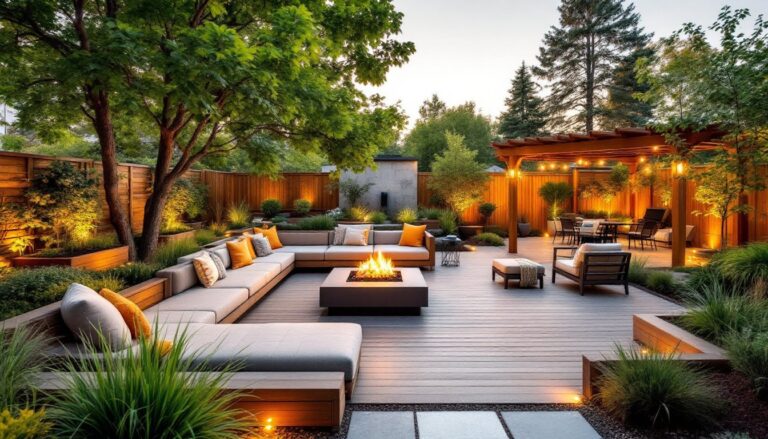
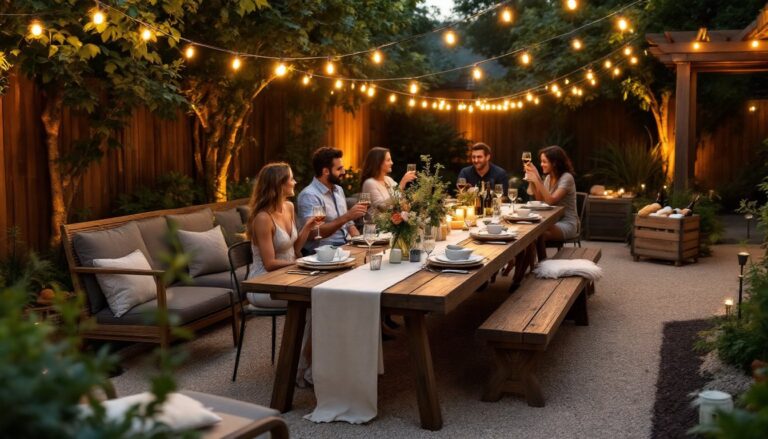
Start by zoning. Separate a dining area (near the kitchen, under shade) from a lounge zone (positioned for afternoon sun or privacy). A fire pit or seating area draws people in naturally. If your lot’s small, a compact dining table and a pair of lounge chairs do more than a massive sectional squeezed into corners.
Coverage matters for year-round use. A pergola provides dappled shade without the cost and commitment of building a patio roof. A retractable shade sail works for seasonal entertainment. A simple fabric canopy anchored to posts buys you three-season comfort. These shade structures also define space visually, making a small yard feel intentional rather than chaotic.
Pathways and lighting extend usability into evening. Stepping stones or gravel paths guide guests safely and add visual rhythm. Solar stake lights along borders cost little, require zero wiring, and read as thoughtful rather than cheap.
Hardscape Features for Structure and Function
Hardscaping, patios, decks, walkways, retaining walls, is the skeleton of any landscaped backyard. A patio creates an anchor point. Permeable pavers or composite materials let water drain instead of pooling. For budget builds, compacted gravel with landscape fabric underneath stays stable and costs a third of pavers.
Retaining walls serve double duty: preventing erosion on sloped land and creating tiered planting beds. Stacked stone looks premium but demands precision: concrete block faced with stone veneer costs less and installs faster. Always compact the base, install proper drainage behind the wall, and check local codes, walls over 4 feet typically need engineering.
Decks work for shaded or problematic soil. Pressure-treated lumber lasts 15–20 years: composite decking lasts longer but costs more upfront. Either way, proper substructure, solid ledger boards, concrete footings below frost line (check your zone), and joist spacing per code, prevents sag and rot.
Water Features and Garden Elements to Add Visual Interest
Water draws the eye and ear. You don’t need a full koi pond: even a small recirculating fountain or stream adds movement and sound that masks neighborhood noise. Install a simple basin fountain on a patio corner, a solar-powered version eliminates wiring and costs under $200. Let it run June through September and drain before winter to avoid freeze damage.
A proper pond or water garden requires planning. Decide on size (at least 2 feet deep to prevent algae bloom and protect fish if adding them). Rigid plastic shells are foolproof: EPDM rubber liners cost less but demand careful installation. Stock with marginal plants, pickerel rush, cattails, that filter water naturally. Plant oxygenators underwater and add goldfish if you want. Edge the pond with stone or plantings so it feels integrated, not plopped down.
Garden structures anchor the visual story. A trellis or arbor frames a seating area and supports climbing vines, clematis, climbing hydrangea, that flower for months. A raised bed garden near the kitchen makes herb picking convenient. Even a single statement shrub or tree, sited thoughtfully, becomes a focal point. Dogwoods, Japanese maples, or serviceberry trees provide seasonal color without demanding constant pruning.
Incorporate hardscape details too. A stone bench tucked into a corner reads as intentional. Stepping stones through planted areas create visual movement. A simple rustic fence or slatted screen adds privacy without the expense of solid fencing. The goal is layers, plants at multiple heights, mixed textures, defined edges, so the eye travels through the space instead of taking it in all at once.
Budget-Friendly Landscaping Solutions for DIY Projects
You don’t need a six-figure budget to build a beautiful yard. Smart material choices and sweat equity make the difference. Start with a clear plan, sketch your zones on paper, so impulse purchases don’t derail your budget.
Materials to source wisely: Mulch, topsoil, and landscape fabric cost pennies per square foot but ship heavy. Buy locally from landscape suppliers or tree services (which sometimes offer free wood chips) rather than bagged versions from big-box stores. A cubic yard of mulch covers 160 square feet at 2 inches deep and costs $30–50 delivered: bags cost triple that.
Perennials and shrubs bought small (1- to 3-gallon containers) cost half the price of mature plants and establish faster because they’re less shocked by transplanting. Group by water needs so one drip line serves five plants instead of scattering thirsty specimens across the yard. Seeds, for wildflowers, grasses, or ground covers, cost almost nothing but demand patience and consistent watering until established.
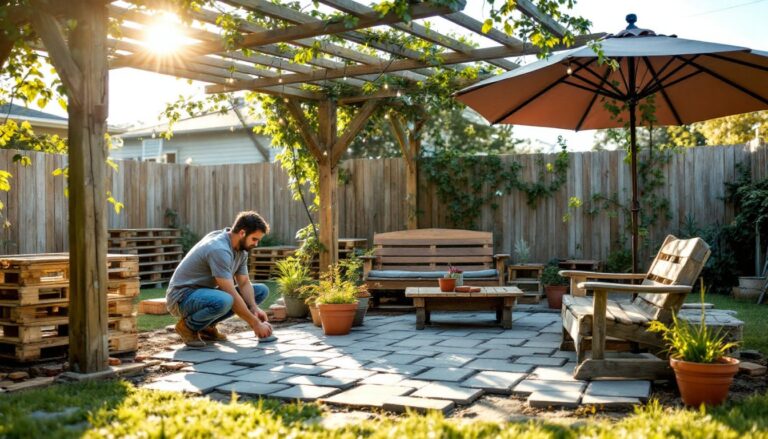
For hardscape, skip the contractor markup. Landscape pavers, stepping stones, and edging install straightforwardly with basic tools. A level, spade, and rubber mallet do what you need. Tamped gravel pathways cost under $2 per square foot installed. Reclaimed materials, old barn wood for raised beds, salvaged stone for borders, add character and cost less than new. Salvage yards and Craigslist hold goldmines if you’re willing to haul and refinish.
DIY installation of simple features, planting beds, mulching, basic paver work, saves 60–70% versus hiring. Where to hire: permit-required work (walls over 4 feet, major drainage, tree removal over 30 feet), structural deck work, and complex irrigation. These risks and codes justify professional fees. For straightforward digging, planting, and patio laying, your weekend and a helper’s enthusiasm do the job. Resources like The Spruce and Homedit offer step-by-step hardscape and planting guides that translate well to DIY execution.
Conclusion
A landscaped backyard isn’t a one-time investment: it’s a living project that evolves with your needs. Start small, zone your space, install basics like pathways and planting beds, then layer in features over time. Mix native plants with hardscape structure, add water or focal points for visual interest, and prioritize what you’ll actually use. Whether you’re on a shoestring budget or ready to spend freely, the principles remain the same: good bones, smart plant selection, and intentional design. Your backyard can shift from unused yard to a place where family gathers, friends linger, and you actually spend summer evenings outside. Get your hands dirty this spring, the best landscaping idea is the one you start today.