Your dog deserves more than a corner of the yard. A well-designed backyard dog area keeps your pet happy, safe, and entertained while giving you peace of mind. Whether you’re working with a sprawling lot or a compact urban space, strategic planning and simple DIY improvements transform any backyard into a dog-friendly haven. This guide covers seven practical ideas to build designated zones, shade structures, landscaping solutions, and cooling stations that work for any budget. You’ll learn how to install safe fencing, create comfortable rest areas, and set up training equipment without hiring contractors.
Table of Contents
ToggleKey Takeaways
- Secure fencing (4–6 feet depending on dog size) is the foundation of a safe backyard dog area, with proper gaps sealed and footings at least 6 inches deep to prevent escape.
- Shade structures like sail canopies, wooden shelters, or strategically planted trees reduce ground temperature by 8–15 degrees and prevent heat exhaustion in summer months.
- Dog-safe landscaping—including clover, zoysia grass, and designated dig zones—protects your pet while maintaining an attractive yard without sacrificing function.
- Multiple cooling stations with fresh water, elevated bowls, and optional dog pools are essential, as dogs need one ounce of water per pound of body weight daily.
- Training and agility equipment (jumps, weave poles, tunnels) provide mental and physical stimulation for a well-exercised, well-behaved companion.
- Budget-friendly DIY projects like pallet platforms, mulch pathways, and shade structures let you build a backyard dog area incrementally without costly contractor expenses.
Designated Play Zones With Safety Fencing
A secure play zone is the foundation of any dog-friendly backyard. Your first step is determining how much space your dog actually needs. A 30-pound dog thrives with 400–600 square feet, while larger breeds may want 800+ square feet: small dogs can be happy in 200–300 square feet.
Fencing materials matter. A 4-foot privacy or semi-privacy fence works for most dogs under 50 pounds: larger or jumping breeds need a 5- to 6-foot fence. Check local building codes and homeowner association rules, many jurisdictions require setbacks and permit applications for permanent fencing. Wood, vinyl, and composite fences each have trade-offs: wood needs regular maintenance and staining every 2–3 years, vinyl costs more upfront but requires minimal upkeep, and composite splits the difference but weighs more during installation.
If permanent fencing isn’t an option, a portable dog pen or run (6 feet × 10 feet or larger) works for temporary containment or travel. These aluminum or steel frames cost $200–$600 and assemble without tools.
Inspect any existing fence for gaps, rot, or loose boards before letting your dog loose. A dog can slip through a 1.5-inch gap, so walk the perimeter and seal holes with wood filler or hardware cloth. Bury fencing at least 6 inches deep or install an L-footer, an underground extension that bends outward, if your dog is a digger.
Don’t forget an exit strategy. Install a self-closing gate with a secure latch (not a simple hook-and-eye) so your pup can’t accidentally nudge it open. Hinges wear out: replace them every few years if the gate sags.
Shaded Seating Areas for Comfort and Rest
Dogs can’t sweat efficiently and overheat faster than humans. Without shade, a backyard becomes a frying pan in summer. Create permanent and temporary shaded zones so your dog always has relief.
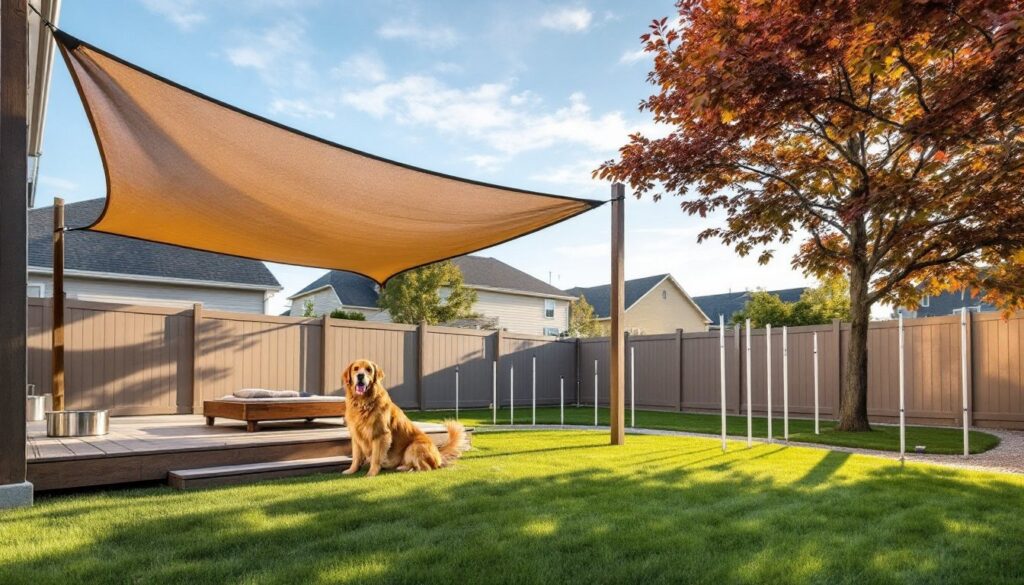
The simplest option is a shade sail or canopy. A 10-foot × 10-foot high-density polyethylene (HDPE) shade sail costs $100–$250 and attaches to posts or fence sections. It reduces ground temperature by 8–15 degrees and lets air circulate, unlike solid tarps that trap heat. Use stainless-steel hardware, regular bolts rust and weaken in months.
If you’re building something more permanent, a 3-sided or 4-sided wooden shelter provides wind and sun protection. Frame it with 2×4 pressure-treated lumber (always use PT lumber for ground contact to resist rot) and top it with metal roofing or heavy-duty polycarbonate panels. A 6-foot × 8-foot shelter costs $300–$600 in materials and takes a weekend to build. Anchor posts at least 2 feet deep in concrete footings (or 24 inches in firm soil with gravel ballast).
Don’t overlook natural shade. Plant trees strategically at least 15 feet away from play zones so falling branches won’t injure your dog. Fast-growing options include red maples and white birches (check hardiness zones for your region). Mature trees take years, but a young 2- to 3-gallon tree grows noticeably in 2–3 seasons.
For rest areas, place a dog bed, cot, or elevated platform in shaded spots. Elevated beds ($50–$150) improve airflow underneath so your dog stays cooler. Cedar chips or mulch around rest areas keep feet clean, though keep mulch away from areas where your dog might ingest large amounts.
Dog-Friendly Garden and Landscaping Solutions
A dog-friendly backyard doesn’t mean sacrificing landscaping. The key is choosing hardy plants and materials that withstand paws and urine without poisoning your dog.
Avoid toxic plants entirely. Sago palms, lilies, azaleas, yews, and foxglove are common garden plants that poison dogs. Instead, plant dog-safe ground covers like clover, zoysia grass, or timothy hay. Clover thrives in partial shade, tolerates heavy foot traffic, and recovers faster than traditional lawn grass. Zoysia is drought-tolerant and dense enough to resist wear. Both are available as seed ($30–$60 per 5,000 sq. ft.) or sod ($150–$400).
Walking paths reduce wear on grass. Lay wood mulch, rubber mulch, or pea gravel in high-traffic routes, these materials are softer on paws and easier to clean than dirt. Rubber mulch ($0.60–$1.50 per square foot) lasts 8–10 years, while wood mulch ($0.30–$0.80 per square foot) breaks down and needs refreshing every 2–3 years. Cedar or pine-based mulches smell better but break down faster.
For digging-prone dogs, create a designated dig zone to redirect that energy. Dig a shallow pit (12–18 inches deep), line it with landscape fabric, and fill it with pea gravel or loose soil mixed with sand. Bury toys in the zone to encourage digging there instead of throughout the yard. You’ll contain the mess and satisfy your dog’s instinct.
Raise planting beds 18–24 inches off the ground to keep dogs out of your vegetables and herbs. Use untreated or composite boards, treated wood contains chemicals (typically copper-based) that can leach into soil. Install beds at least 3 feet away from play zones and consider fence-off sections with small gates if needed. Resources like Gardenista’s guide to dog-friendly gardens offer more plant-specific advice.
Water Features and Cooling Stations
Water is essential on hot days. A dog without access to shade and water can suffer heat exhaustion in under an hour. Set up multiple cooling stations throughout the play zone.
Start with a heavy-duty water bowl (stainless steel or ceramic) placed in a shaded area. Change water twice daily in summer: algae and debris accumulate fast. Use a bowl stand or raised feeder ($20–$50) so your dog doesn’t have to crouch, reducing strain on joints, especially important for older dogs or large breeds.
A dog pool or kiddie pool ($30–$80) offers full-body cooling. Rigid plastic pools last 2–3 seasons: inflatable ones inflate in minutes but puncture more easily. Place it on level ground with shade nearby. Never use chlorine: opt for a pet-safe pool treatment if you’re refilling frequently, or drain and refill every 2–3 days. Some dogs love pools immediately: others need weeks of encouragement. Start with shallow water and positive reinforcement.
For a permanent solution, a small recirculating fountain or mister ($150–$400) cools the air and provides running water dogs find irresistible. These need electricity, so run outdoor-rated GFCI extension cords (cost $15–$30) and keep all connections elevated or weatherproofed. Misters attached to hose bibs are cheaper ($50–$100) and require no electricity, just water pressure.
Proper hydration prevents heat stress. Dogs need about one ounce of water per pound of body weight daily: in heat, they’ll drink more. Watch for panting, drooling, or lethargy, signs of overheating. If your dog shows these symptoms, move to shade, offer water, and apply cool (not cold) water to paws and belly. Seek veterinary care if symptoms persist.
Install drainage around water stations so standing water doesn’t create mosquito breeding grounds or bog down the soil. Grade the ground away from structures at a slope of at least 2% (1/4 inch per foot).
Training and Exercise Equipment Setup
A well-exercised dog is a well-behaved dog. Incorporate training and agility areas into your backyard layout so your pup gets mental and physical stimulation.
Start simple with a jump or hurdle. Buy a collapsible set ($40–$80) or build one from PVC pipe and connectors ($15–$30 in materials). A basic jump consists of two vertical supports and a horizontal bar set at your dog’s shoulder height, roughly 12–18 inches for small dogs, 24–30 inches for larger breeds. Train incrementally: never force a jump. If your dog has joint issues, consult your vet before adding jumping exercises.
A weave pole set ($30–$100 or DIY with PVC) teaches directional control and focus. Space poles 24 inches apart in a line and let your dog practice snaking through. These are fun for all ages and builds coordination.
Tires or agility tunnels ($50–$150) provide crawl-through challenges. Lay a used tire flat and have your dog step through: as confidence builds, raise it slightly. Tunnels are especially valuable for anxious dogs because they provide a sense of security while building confidence.
A tug rope or flirt pole (a rod with a rope and toy attached) offers controlled chase play. This is handy for rainy days or when the yard is muddy. Cost is minimal ($20–$40), and it burns energy while keeping you in control.
Set aside a dedicated training area with good drainage and minimal distractions. Use landscape edging or low fencing (2–3 feet) to define it clearly. This tells your dog “work happens here” and reduces wandering during training sessions. Practice short, frequent sessions (5–10 minutes) rather than one long session: dogs retain better with variety.
Budget-Friendly DIY Projects for Dog Areas
You don’t need to spend thousands to create a dog paradise. These DIY projects deliver results on a tight budget.
DIY Shade Structure: Build a simple A-frame or lean-to from 2×4 pressure-treated lumber (budget $150–$250). Use carriage bolts and galvanized hardware for longevity. Top it with shade cloth or polycarbonate panels. This takes a day and basic tools (circular saw, drill, level).
Pallet Projects: Free or cheap wooden pallets become dog beds, barriers, or raised platforms. Clean them thoroughly, sand and stain if desired, then arrange in your layout. Pallets are easy to reconfigure as your dog’s needs change. Cost: $0–$50 if bought from local shops.
Mulch Pathways: Define traffic zones with landscape edging ($0.50–$2 per foot) and fill with wood chips ($20–$40 per cubic yard). A 50-foot path costs roughly $50–$100. Refreshing mulch yearly keeps it looking fresh and suppresses weeds.
Water Stations: A large plastic storage bin ($15–$30) filled with water and placed in shade serves as a drinking and cooling station. Secure it so it won’t tip. Replace water daily.
Grass Alternatives: Overseed bare patches with clover seed ($10–$20 per 2,000 sq. ft.) or install dog-friendly sod (zoysia or Bermuda) piecemeal as budget allows rather than the entire yard at once. Spreading costs over a season keeps expenses manageable.
Plant a Tree: A young sapling ($20–$60) planted strategically grows into permanent shade. In 2–3 years, it’ll provide relief. Plant in early spring or fall and water consistently the first year.
These projects let you build over time without going into debt. Prioritize safety fencing first, then shade, then amenities. Your dog doesn’t care if things look Instagram-perfect, they care about safety, comfort, and play.
Conclusion
Creating a functional, safe, and enjoyable backyard dog area boils down to addressing five core needs: containment, shade, fresh water, exercise, and comfort. Start with solid fencing and shade structures, then layer in landscaping, cooling options, and training equipment as your budget and timeline allow. Visit backyard entertaining ideas for inspiration on incorporating dog zones into your overall outdoor space. Every dog is different, a young border collie needs more exercise and stimulation than a senior lap dog, so tailor your setup to your pet’s age, size, and temperament. The investment pays dividends in a happier, healthier, and better-behaved companion for years to come.