A well-designed patio or walkway can completely reshape how you use your backyard. Pavers are one of the most versatile hardscaping materials available, they’re durable, come in dozens of colors and patterns, and work for everything from a small entry path to a sprawling entertaining area. Whether you’re a seasoned DIYer or tackling your first outdoor project, finding the right paver ideas for your backyard helps you create a space that matches both your style and budget. The 15 design ideas below break down what’s practical, what looks stunning, and where to cut corners without cutting corners on quality.
Table of Contents
ToggleKey Takeaways
- Paver ideas for your backyard range from classic patterns like herringbone and running bond to modern large-format designs, all offering durability and visual versatility.
- Proper base preparation with compacted gravel, landscape fabric, and leveling sand is non-negotiable for preventing cracking and settling, regardless of paver cost.
- Mixing materials like concrete pavers with natural stone or flagstone adds character, defines zones, and can stretch your budget effectively when planned carefully.
- Curved layouts and circular patterns psychologically make small spaces feel larger and encourage natural movement, though they require 10–15% extra material for cuts and waste.
- Budget-friendly approaches include choosing concrete pavers in simple patterns, creating smaller premium feature areas, and sealing pavers every 2–3 years to extend lifespan.
- Regular maintenance—sweeping, annual pressure washing at 1,500–2,000 PSI, and promptly addressing weeds—keeps your backyard entertaining space inviting and adds years to your paver installation.
Classic Patio Patterns That Never Go Out of Style
When in doubt, go with a classic. Herringbone, running bond, and basketweave patterns have stayed popular for decades because they work with nearly any home style and look sharp for years.
A herringbone pattern lays rectangular pavers at 45-degree angles, creating a V-shaped weave. It’s visually dynamic without being trendy, and it actually performs well, the interlocking angles distribute foot traffic weight evenly, reducing settling. Running bond is simpler: stagger rectangular pavers in offset rows like bricks. Both patterns work with concrete pavers, clay brick, or natural stone.
Basketweave alternates pairs of pavers (usually 2×4 or 3×6 inch) in a woven appearance. It’s easier to install than herringbone and works beautifully with large pavers. All three patterns require accurate cutting at edges, a wet saw with a diamond blade is the right tool here. Expect to set aside time for layout and dry-run placement before mortar or sand goes down. With small backyard entertaining area projects, a single pattern in classic gray or tan keeps things cohesive and timeless.
Modern and Contemporary Paver Designs for Sleek Outdoor Living
Modern paver design strips away fuss. Think large-format pavers, minimal grout lines, monochromatic palettes, and clean geometric cuts. Oversized concrete or porcelain pavers (24×24 inches or larger) create an open, flowing appearance with fewer visible joints.
Contemporary designs often pair one neutral tone, charcoal, graphite, or warm gray, with subtle texture variation. Some homeowners add linear grooves or a matte finish for visual depth without pattern complexity. Mixed materials work here too: large pavers with steel edging or thin strips of decomposed granite between sections.
Installation requires precision and usually a power saw or angle grinder for clean cuts. Large pavers are heavy: proper base preparation (4 inches of compacted gravel, landscape fabric, and leveling sand) prevents cracking. This approach works especially well for backyard designs for entertaining zones where clean lines support outdoor furniture and don’t compete visually.
Combining Materials: Mixed Paver and Stone Options
Mixing materials adds character and can stretch a budget. Combine pavers with natural stone, gravel, or flagstone to create visual interest and define different zones.
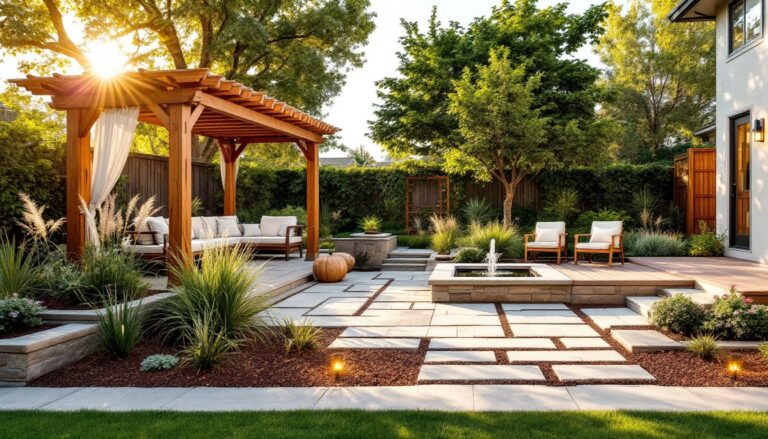
A practical combo: concrete pavers in a main seating area with bluestone or flagstone accents along edges or as stepping-stone borders. Irregular flagstone creates an organic, rustic feel while pavers keep the core stable and level. Another approach uses permeable pavers (like open-grid concrete or recycled rubber) alongside gravel or planted areas. This reduces runoff and works well on sloped properties.
Mixed materials require careful planning. Different materials settle at different rates, so proper base preparation is non-negotiable. Use landscape fabric between materials to prevent sand migration and weeds. Edge restraints (metal or concrete) separate distinct material zones clearly. This layered approach suits both functional pathways and featured gathering spaces. According to design guides like those from Gardenista’s hardscaping resource, mixing complementary materials balances cost and aesthetics effectively.
Circular and Curved Layouts for Visual Interest
Straight lines are functional, but curves draw the eye and soften hard edges. Circular patterns, curved borders, and meandering pathways turn a utilitarian patio into a landscape feature.
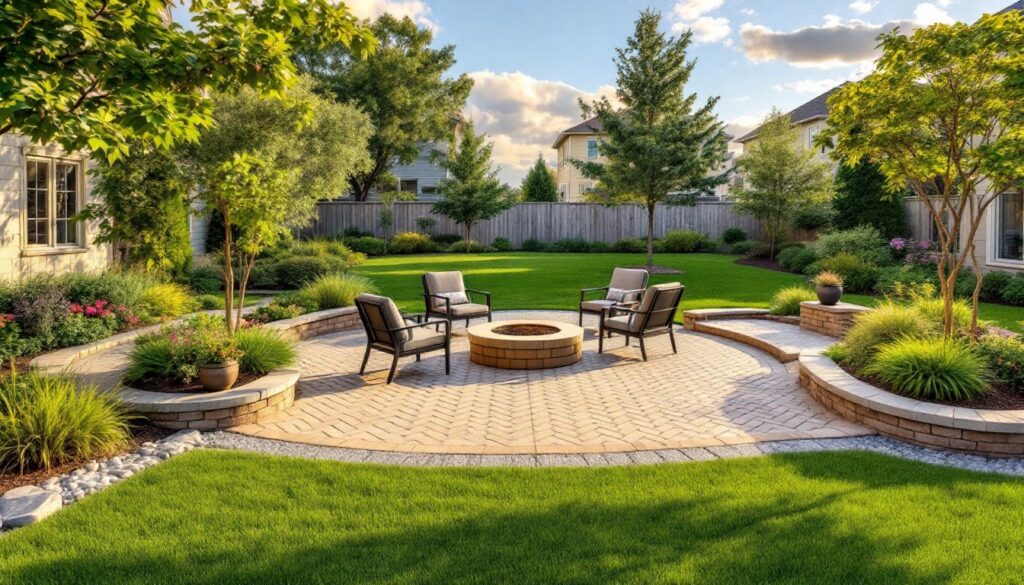
A circular paver pattern radiates from a center point, typically around a fire pit, seating area, or focal point tree. Cutting pavers to fit the curve requires precision, templates and wet saws are essential. Curved pathways work beautifully through gardens or alongside plantings, creating natural flow without sharp corners.
Curves also work psychologically: they make small spaces feel larger and encourage exploration. A curved edge on a rectangular patio softens the overall look. Installation takes longer because cuts are more complex and layout changes frequently as curves develop. Budget extra time and material for waste (curved layouts typically see 10–15% waste versus 5–8% for square layouts). The effort pays off when entertaining, curved zones naturally encourage movement and conversation.
Budget-Friendly Paver Solutions Without Sacrificing Style
Premium doesn’t mean expensive. Several approaches keep costs down while maintaining visual impact.
Concrete pavers are the most economical option and come in colors and finishes that mimic natural stone or brick. Basic rectangular shapes cost less than specialty sizes. Simplifying your design, choosing one pattern and one color, reduces waste and installation complexity. A running bond or simple grid pattern uses less material and cuts faster than elaborate designs.
Another strategy: create a smaller feature area (8×10 feet of premium material) surrounded by budget pavers. This draws focus without overcommitting. Use backyard entertaining essentials like fire features or seating to define premium zones visually. Crushed stone or pea gravel fills less critical areas, reducing material costs significantly.
Don’t skimp on base preparation, that’s where projects fail. Compacted gravel, sand, and proper slope are non-negotiable, whether pavers cost $1 or $10 each. Regional pricing varies dramatically: get quotes from local suppliers and factor in delivery. Off-season purchases (late fall or winter in northern climates) sometimes yield discounts, though fewer installer options exist.
Maintenance Tips to Keep Your Pavers Looking Beautiful
A well-maintained patio outlasts a neglected one by years. Simple routines prevent weeds, stains, and color fading.
Sweep and rinse regularly. Remove debris weekly to prevent weeds taking root in joints. Annual pressure washing (at 1,500–2,000 PSI for concrete pavers: lower for natural stone to avoid damage) removes algae and dirt buildup. Don’t use excessive pressure, it can dislodge sand and damage softer materials like limestone.
Seal pavers every 2–3 years. A quality sealer protects against stains, UV fading, and water absorption. Choose a sealer appropriate for your paver material, concrete sealers differ from natural stone products. Follow the manufacturer’s drying time before allowing foot traffic.
Address weeds promptly. Pull them by hand or apply herbicide to joints as needed. Sand joints stabilize pavers, so refill areas as sand erodes. Replace damaged pavers individually, no need to remove the entire patio. Keep salt away from frost-prone regions (it can break down mortar and cause spalling). For small backyard entertaining ideas, regular maintenance keeps the space inviting and extends its lifespan significantly.
Conclusion
Paver ideas for your backyard range from timeless classics to cutting-edge contemporary designs, and everything in between. Choose patterns and materials that match your home’s style, your climate zone, and your budget. Start with a clear plan, invest in proper base prep, and maintain your work. A well-executed paver project becomes a focal point your family and guests will enjoy for decades.