
If your lawn looks like a moonscape after your dog’s daily romps, you’re not alone. Traditional grass struggles under constant paw traffic, digging, and the damage dogs naturally inflict. The good news? Removing grass entirely and installing durable, dog-friendly alternatives gives you a yard that’s easier to maintain and safer for your pup. Whether you’re dealing with mud, dead patches, or endless cleanup, no-grass solutions deliver practical durability without sacrificing your dog’s outdoor fun. Let’s explore the best options for transforming your backyard into a resilient space both you and your dog will enjoy.
Table of Contents
ToggleKey Takeaways
- No grass backyard ideas for dogs eliminate muddy patches, urine burn, and parasites while reducing maintenance costs and veterinary visits compared to traditional lawns.
- Artificial turf designed for pets offers durability, easy cleanup, and a comfortable year-round surface, costing $8–15 per square foot with a 10–15 year lifespan.
- Pea gravel and permeable surfaces are the most budget-friendly option at $200–400 for a 400-square-foot area, though they require occasional raking and aren’t ideal for dogs that chew stones.
- Wood chips and mulch provide natural aesthetics and joint cushioning but need replacement every 2–3 years; always avoid cocoa, walnut, cherry, and black locust varieties that are toxic to dogs.
- Hardscape solutions like permeable pavers and concrete deliver lifetime durability and can be combined with softer surfaces to create functional zones for play, rest, and relief.
- The most successful no grass backyards segment spaces into designated relief, play, and rest zones tailored to your dog’s behavior and your lifestyle preferences.
Why Eliminate Grass From Your Dog’s Backyard
Dogs and grass don’t always coexist peacefully. Constant foot traffic creates bare patches that become muddy, dusty, or weedy. Larger breeds and high-energy dogs dig, leaving craters and erosion. Add urine burn (those brown dead spots) and seasonal shedding into the mix, and you’ve got a maintenance nightmare.
Grass also traps moisture, harboring parasites, mold, and bacteria that can irritate paws and skin. If your dog has allergies or sensitive feet, removing grass eliminates a major irritant source. Beyond pet health, grass requires regular mowing, fertilizing, watering, expenses and time that disappear with alternative surfaces.
Durable no-grass options reduce veterinary visits, eliminate chemical runoff from fertilizers and pesticides, and give your dog safer places to rest and play. Most alternatives also last longer than grass, making them smarter long-term investments for active households.
Artificial Turf For A Low-Maintenance Dog-Friendly Yard
Pet-friendly artificial turf has come a long way. Unlike standard turf, dog-specific versions feature wider blade spacing and antimicrobial treatments that combat odor and bacteria buildup from urine.
Installation basics: Proper drainage is critical, water must flow away from your home‘s foundation. Most installers lay crushed rock (¾-inch minus granite) as base, then add a permeable underlayment before rolling out the turf. Over time, urine accumulates in the base layer, so choosing a high-quality drainage system prevents smelly, algae-covered surfaces.
Benefit: Artificial turf tolerates constant digging and running without wear patterns. Your dog plays on a clean, cushioned surface year-round, and cleanup is as simple as rinsing with a hose. Expect costs of $8–15 per square foot installed, depending on base preparation and local labor rates.
Maintenance: Rinse weekly to manage odor, rake occasionally to fluff matted fibers, and replace sealer annually. Unlike real grass, you’ll skip fertilizer, pesticides, and watering, which adds up over time. Artificial turf typically lasts 10–15 years before fading or backing degradation becomes noticeable.
Pea Gravel And Permeable Surfaces
Pea gravel is affordable, dog-safe, and drains instantly. Small, smooth stones roughly the size of peas are easy on paws and create a clean, maintained look without chemicals or heavy equipment.
Installation: Start with landscape fabric to suppress weeds, then spread 2–3 inches of pea gravel. A 400-square-foot area costs roughly $200–400, making it the budget-friendly option. Dogs can dig in gravel (they will), but unlike sand, it won’t compact or turn to mud.
One caveat: some dogs ingest small stones, risking blockages. If your pup is a persistent chewer, pea gravel isn’t ideal. Also, gravel migrates over time, edges need occasional raking, and you’ll lose material to driveways and landscaping.
Enhanced alternative: Jersey Shore Gravel or crushed limestone offer similar affordability but pack down slightly better. For a premium permeable option, consider recycled rubber nuggets (shredded tire material), which stay in place, provide cushioning, and don’t scatter. Rubber costs more upfront ($1,000–2,000 for typical yards) but requires minimal maintenance and lasts longer than pea gravel.
Mulch And Wood Chip Options
Mulch and wood chips offer natural aesthetics and comfortable cushioning for dogs’ joints. Cedar or cypress chips contain natural oils that repel some insects, though these benefits fade as the material breaks down.
Best practices: Use arborist-grade wood chips (0.5–1 inch diameter), not dyed landscape mulch. Dyed varieties contain colorants that can stain paws and fur, and they’re less sustainable. Spread 3–4 inches thick to provide cushioning and suppress weeds.
Mulch requires replacement every 2–3 years as decomposition compacts it and breaks it down. Costs run $100–300 annually for a typical yard, making it moderately priced compared to artificial turf but more expensive long-term than pea gravel.
Safety note: Avoid cocoa mulch entirely, it contains theobromine, toxic to dogs. Also steer clear of walnut, cherry, and black locust chips, which produce compounds harmful to pets. Stick with cedar, cypress, pine, or untreated hardwood chips. Some homeowners combine wood chips in shaded rest areas with pea gravel in high-traffic play zones for the best of both worlds.
Hardscape Solutions: Pavers And Concrete
For durability that lasts decades, permeable pavers and poured concrete create wear-proof surfaces that handle any dog, and human, foot traffic.
Permeable pavers (concrete or stone with gaps filled by gravel or sand) drain well and feel less harsh on paws than solid concrete. Installation involves a 4–6 inch gravel base, sand leveling layer, and the pavers themselves. Costs range from $8–15 per square foot installed, similar to artificial turf but with lifelong durability. [Small Backyard Entertaining Area] designs often benefit from transitional paver walkways that blend function with aesthetic appeal.
Concrete is the most economical hardscape ($3–8 per square foot installed) and practically indestructible. Downsides: it stays cold in winter and hot in summer, can be slippery when wet (risky for older dogs), and feels hard on joints during high-impact play. Textured finishes improve grip: sealing extends lifespan and reduces staining from urine.
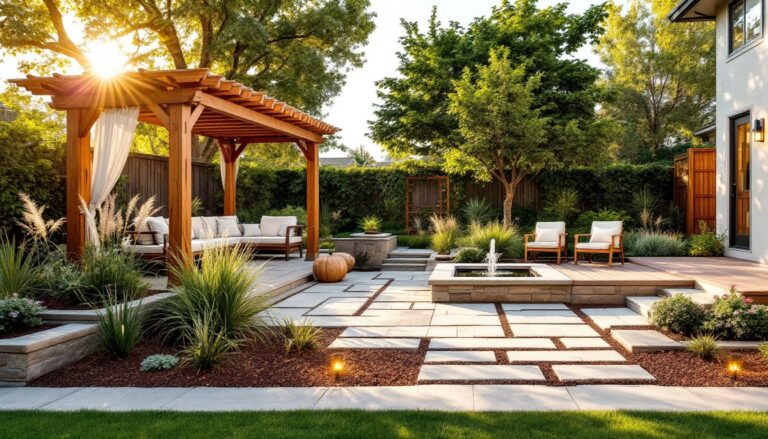
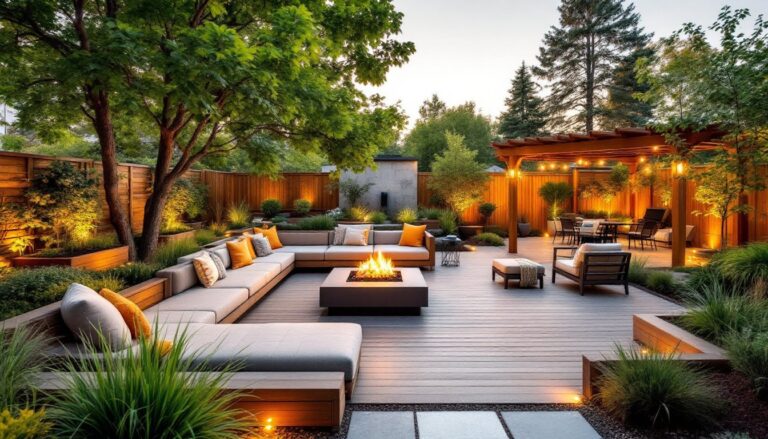
Hybrid approach: Combine a central paver patio for lounging and entertaining with softer surfaces (gravel, mulch, or turf) in play areas. This balances durability with comfort and creates natural zones your dog learns to navigate. Concrete or pavers also handle drainage from downspouts and slope water away from foundations, a structural bonus.
Creating Zones For Play, Rest, And Relief
The best no-grass yards aren’t one-size-fits-all surfaces, they’re segmented spaces tailored to how your dog actually uses the yard.
Relief zone: Designate a specific pea gravel or mulch area (8×8 feet minimum) where you’ll train your dog to potty. Hose it weekly, and odor stays manageable. Dogs naturally return to familiar potty spots, making cleanup predictable and contained.
Play area: High-traffic zones need durable, paw-friendly surfaces. Artificial turf or wood chips work well here since dogs dig and run hard. [Small Backyard Entertaining Ideas] suggest keeping these zones away from seating areas to minimize dust or debris near your relaxation spots.
Rest zone: Shaded areas under trees benefit from softer mulch or turf where your dog can cool off without sinking into hard concrete. Include a [Small Backyard Entertaining] option like a shaded deck or pergola if you want to relax alongside your pup.
Transition paths: Use pavers or concrete to connect zones and define movement flow. Dogs learn these paths quickly and track less debris indoors. Clear sight lines also help you monitor your pup’s location and activity.
Size matters: even a small yard benefits from 100–150 square feet of dedicated play space. If your yard is truly tiny, focus on one premium surface (like artificial turf) rather than spreading limited resources thin across mediocre options.
Conclusion
Ditching grass for durable, dog-friendly alternatives transforms your backyard from a muddy disaster zone into a functional outdoor space. Whether you choose artificial turf for low maintenance, pea gravel for budget savings, mulch for natural aesthetics, or hardscape for lifetime durability, the key is matching the surface to your dog’s behavior and your lifestyle. Most successful yards combine multiple surfaces in thoughtful zones, giving your pup safe, comfortable places to play, rest, and relieve themselves while keeping your maintenance and cleaning headaches to a minimum.