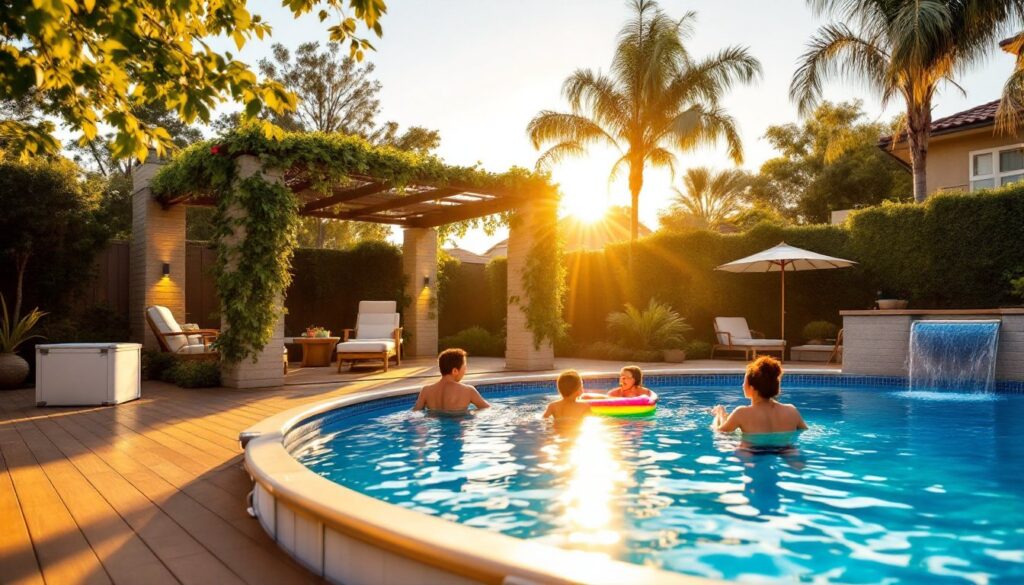
Adding a pool to your backyard doesn’t have to mean a sprawling in-ground installation or a professional contractor bill that makes you wince. Whether you’ve got a small urban lot, a modest budget, or just want to dip your toes into the idea, there are real backyard pool solutions that work for different homes and lifestyles. This guide walks through practical options, from compact above-ground setups to modern features that turn your outdoor space into an entertaining haven, so you can pick an approach that fits your property and wallet.
Table of Contents
ToggleKey Takeaways
- Above-ground and plunge pools offer affordable backyard pool ideas that require minimal excavation and can be installed in as little as a weekend, with costs ranging from $500 to $3,000 depending on size and quality.
- Stock tank pools are the budget-friendly DIY option, costing under $700 when using a used tank ($100–$300) plus a basic pump and filter system, making them ideal for small spaces.
- Modern backyard pools benefit from water features like fountains and spillovers ($100–$1,200) plus LED lighting ($50–$400 per fixture) that enhance both aesthetics and water circulation.
- Proper site preparation—including ground leveling within 1 inch accuracy and 2 inches of compacted sand underlayment—is critical to prevent premature pool failure and uneven wall stress.
- Landscape and hardscape design around your pool, including composite decking, privacy screening, and shade structures (pergolas or sail shades), transforms the pool into a finished entertaining space that complies with local safety codes.
Small Pool Designs for Tight Spaces
Compact Above-Ground Options
Above-ground pools are the quickest way to add water to a tight yard. Modern models come in round, oval, and even rectangular footprints, with depths ranging from 3 to 5 feet. A standard 15-foot round pool takes up roughly 180 square feet, manageable for suburban lots or urban backyards.
Setup is straightforward: level the ground, lay down sand underlayment (about 2 inches), assemble the frame and walls, and fill. No digging, no permits in most cases, and you can be swimming in a weekend. Look for pools with reinforced sidewalls and drain plugs: they handle wear better than budget models. Prices range from $500 to $3,000 depending on size and construction quality.
The catch? These pools are temporary, expect 3 to 10 years of use depending on maintenance and material grade. Winterization is essential in cold climates: you’ll need to drain and store covers and equipment. Water maintenance (chlorine, pH balance, filtration) is similar to any pool.
Plunge Pools and Soaking Alternatives
If you want a built-in feel without the footprint of a full swimming pool, plunge pools are the answer. These are shallow, compact pools, typically 6 to 12 feet long and 3 to 4 feet deep, designed more for cooling off and soaking than laps. They cost less to install and operate than larger pools and work beautifully in tight urban spaces.
A fibreglass plunge pool arrives pre-formed and installs in a day or two. Concrete or vinyl options take longer but offer custom shapes and depths. The real advantage? Smaller filtration systems, lower water heating costs, and minimal chemical maintenance.
For budget-conscious DIYers, stock tank pools (converted agricultural water tanks) have become popular. A 2,400-gallon stock tank costs $300 to $600, fits in a corner, and can be dressed up with decking and landscaping. They’re shallow, about 2 feet deep, but perfect for hot summer dips. You’ll still need a pump and filter, but setup is simpler than a traditional pool.
Whether you choose a plunge pool or stock tank, start by checking local codes. Some jurisdictions require permits or fencing for any permanent water feature, even small ones.
Budget-Friendly DIY Pool Solutions
Building a pool yourself is possible, but “DIY pool” usually means managing installation and finishing of a kit system rather than excavating and pouring concrete from scratch. Pre-built above-ground pools and modular fiberglass shells handle the heavy engineering: your job is site prep, assembly, and plumbing connections.
For a 20-foot round above-ground pool, budget $1,500 to $2,500 for the pool itself, plus another $1,000 to $2,000 for a pump, filter, and basic controls. Sand, gravel for leveling, and a cover add another $300 to $500. Labor to excavate and level typically runs $200 to $800 depending on site conditions.
The prep work makes or breaks the project. A poorly leveled base causes uneven wall stress and premature failure. Use a long level or laser level to check the ground: high spots shouldn’t exceed 1 inch over the pool’s diameter. Compact the soil and lay 2 inches of sand, then dampen and level it again.
Stock tank conversions are the budget winner. A used tank (search local farm suppliers or online marketplaces) runs $100 to $300. Add a submersible pump and basic sand filter for $200 to $400, and you’ve got a functional small pool for under $700. It won’t win a design award, but it works.
For real savings, buy off-season (late fall or early winter) when pool retailers clear inventory. You’ll lose the summer swim that year, but savings can hit 30 to 40 percent. Factor in water costs too, filling a 12,000-gallon pool runs $30 to $100 depending on your region’s water rates.
Modern Features to Elevate Your Pool Area
Water Features and Lighting Effects
A basic pool is functional: adding water features and lighting turns it into a destination. Fountains, spillovers, and jets aren’t just aesthetic, they improve water circulation, reduce chlorine demand, and add sound and movement that feels luxurious.
Fountain kits clip onto pool walls and run $100 to $500 depending on size and spray patterns. They draw water through a pump, recycle it back, and need minimal wiring. Deck jets and spillovers ($300 to $1,200 installed) create dramatic water effects and work on both above-ground and in-ground pools. If you’re comfortable with basic plumbing, you can handle installation: if not, hire a pool tech for a few hours.
Lighting transforms your pool from functional to magical. LED pool lights cost $50 to $300 per fixture and use a fraction of the electricity of older halogen bulbs. Submersible LED pods clip onto pool walls: above-ground pools often ship with pre-drilled light ports. Solar pool lights ($20 to $100 each) work for ambient deck lighting and require zero wiring.
Color-changing LEDs ($150 to $400) sync to your phone and let you shift moods, cool blues for calm, vibrant reds for entertaining. They’re not essential, but they make a pool feel like a resort after dark. Install dedicated circuits for any hardwired lights: don’t daisy-chain them to existing outdoor outlets.
Consider also adding a small waterfall or spillover feature to one corner. These run water through a recirculating pump and cost $200 to $800 to set up. They improve water circulation, break up monotony, and create ambient sound that masks street noise.
Creating the Perfect Pool Landscape and Hardscape
The pool is just the centerpiece: the landscape and hardscape around it make the space work and look finished. Start with safety clearance: above-ground pools need 4 feet of flat, open ground around the perimeter for maintenance access and safe entry/exit. In-ground pools require fencing or barriers that comply with your jurisdiction’s codes, typically non-climbable fencing with self-closing gates.
For decking, composite or treated lumber works better than concrete alone in freeze-thaw climates. Build a 2-foot-wide deck around at least one side using pressure-treated 2×10 joists spaced 16 inches on center. Composite decking ($5 to $15 per linear foot installed) is more expensive upfront but won’t rot or need staining every few years. Concrete pads work too and cost less, but they can be slippery when wet, add non-slip paint or textured coating.
Landscaping around the pool serves privacy, noise reduction, and aesthetics. Plant screening shrubs or install a simple 6-foot fence or screen on one or two sides to block sight lines and reduce wind, which cools pool water and evaporates it. Privacy hedges take 2 to 3 years to establish: a fence is instant. Consider sightlines from neighboring windows, not everyone wants to see your pool all summer.
Water features and landscaping are where internal links to Backyard Entertaining Essentials and Backyard Designs for Entertaining come in handy. These resources cover deck furniture, shade structures, and entertaining zones that work alongside a pool.
For hardscape materials, check references from landscape design guides for swimming pool areas to see how professionals handle drainage, plant selection, and patio layouts. Drainage is critical, pool water splashing and rain runoff shouldn’t pool on your deck or settle near your house’s foundation.
Add a simple shade structure (pergola, umbrella, or sail shade) within 10 to 15 feet of the pool. Shade keeps swimmers comfortable and reduces glare on water. A 4×4 pergola kit runs $500 to $1,200 and can be bolted to a concrete pad in a day. If you want instant shade on a budget, a 8×10 retractable shade sail ($300 to $600) clips to posts and folds away when not needed.
Finally, add storage. Pool toys, floats, and maintenance gear pile up fast. A small lockable storage box ($200 to $400) keeps chemicals secure and out of sun. The 195 Gallon Backyard Oasis® Storage and Entertaining Station doubles as seating and storage, blending function with deck space. Alternatively, a simple weatherproof shed or deck-mounted cabinet works just as well and costs less.