A dog run, a dedicated outdoor enclosure where your pup can move freely without risk of escape, solves a common DIY problem: how to give your dog independent outdoor time while keeping them safe. Whether you’re working with a small urban yard or sprawling acreage, a dog run keeps your pooch secure, entertained, and away from garden beds. These practical enclosures range from simple wire pens you can assemble in an afternoon to sturdy structures with shade and enrichment features built in. Below are seven dog run ideas that fit different budgets, skill levels, and yard layouts.
Table of Contents
ToggleKey Takeaways
- A dog run provides safe, independent outdoor time while protecting your landscaping and reducing boredom-related behaviors like excessive barking or chewing.
- Dog run designs range from budget-friendly modular pens ($40–$150) to permanent structures, with mid-size runs typically measuring 8 feet by 5 feet using pressure-treated posts set in concrete footings.
- Shade cloth or a wooden roof frame is essential to reduce ground temperature by 15–20 degrees and prevent heat-related health risks in warmer climates.
- Add enrichment elements like digging boxes, puzzle feeders, water fountains, and rotating toys to keep your dog mentally stimulated and prevent boredom-related destructive behavior.
- Weekly maintenance including waste removal, fencing inspections, hardware tightening, and hardware replacement every 2–3 years ensures long-term durability and safety.
- Check local zoning codes before building a dog run, as roofed structures or enclosures taller than 4 feet may require permits.
Why Your Dog Needs a Dedicated Outdoor Space
A dedicated dog run solves several real problems. First, it gives your dog supervised outdoor time without constant leash duty or the risk of escape. Second, it protects your landscaping, no more trampled flower beds or dug-out patches under the fence. Third, it lets dogs decompress during the day, which reduces boredom-related behavior like excessive barking or chewing.
Dogs benefit from fresh air, sun exposure, and the mental stimulation of watching birds, squirrels, and neighborhood activity. A properly designed run also saves you from frequent trips to let your dog in and out. Most importantly, it’s a safe containment option for dogs who are escape artists or still learning recall. An enclosure gives you peace of mind, your dog can’t slip through an open gate or wander into the street while you’re working in the front yard.
Simple Enclosed Dog Run Designs
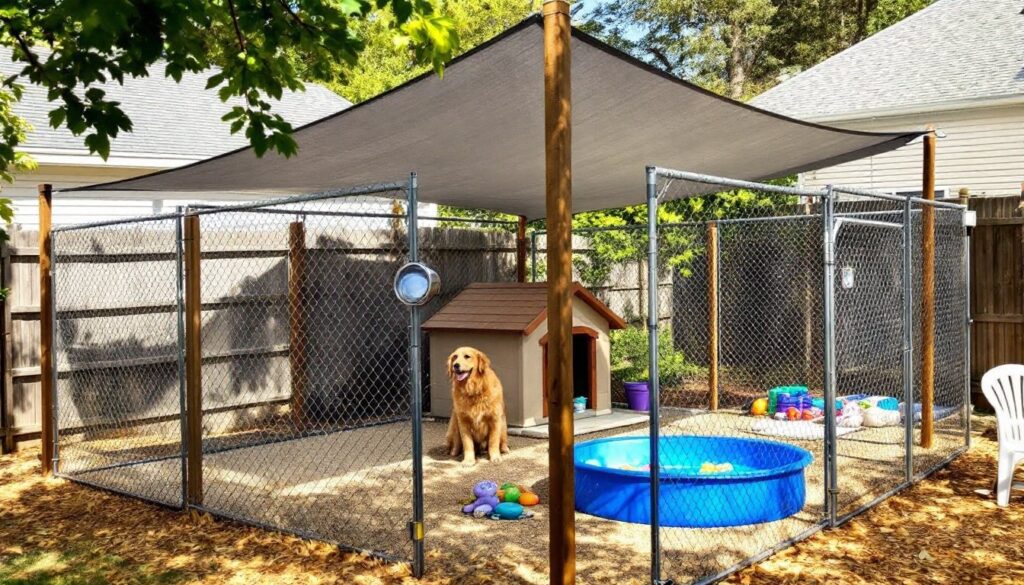
The most straightforward dog run is a rectangular enclosure made from welded-wire panels or chain-link fencing attached to posts. A typical mid-size run measures 8 feet long by 5 feet wide, though dimensions scale based on your dog’s size and yard space.
Basic framework approach: Set 4×4-inch pressure-treated posts in concrete footings (dig 24 inches deep, set posts in 8 inches of concrete). Space posts 4 to 6 feet apart. Attach ½-inch welded-wire fencing or chain-link panels to the posts using galvanized hose clamps, J-bolts, or fence brackets. The wire should extend at least 6 inches below ground or be buried to prevent digging escapes.
For a raised floor inside the run, lay down landscape fabric and top it with pea gravel or mulch to improve drainage and reduce mud. This prevents urine scald on grass and keeps paws cleaner.
Budget-Friendly Fence Pen Options
If you’re looking for a faster assembly, modular pet pens, sometimes called exercise pens or x-pens, come in steel panels that interlock without tools. They range from 6 to 16 feet in total perimeter and cost $40–$150. These work well for smaller dogs or temporary setups but aren’t as durable long-term as built structures. For semi-permanent setups, a dog tie-out cable anchored to a ground stake or truck lets dogs move in a circle within a roughly 30-foot radius, though this offers less containment than an enclosed run. Always use a swivel connector to prevent tangling and ensure the stake is rated for your dog’s weight plus 50 percent.
Shade and Comfort Features
Texas heat and UV exposure aren’t just uncomfortable, they’re dangerous. Without shade, a dog can overheat in as little as 30 minutes. Add a shade sail or 30-percent shade cloth stretched over half the run frame using galvanized eye bolts and stainless-steel cable. This reduces ground temperature by 15–20 degrees and lets your dog self-regulate.
For permanent shade, consider building a wooden frame roof over part of the run. Use 2×2-inch lumber to form a sloped frame, then attach corrugated plastic panels or asphalt shingles. A sloped roof directs rain away and provides excellent weather protection. Leave one side open for airflow.
Underfoot comfort matters too. Pea gravel or marble chips drain well and stay cooler than soil: they also discourage digging. If your region is cold, add a dog-house shelter, even a basic insulated structure with a hinged roof for cleaning. Position it near the shaded corner so your dog can retreat from sun or rain.
Water access is non-negotiable. Mount a spill-resistant water bowl in a frame or use a bowl holder to prevent tipping. In summer, consider a dog water fountain or dripper system that keeps water fresh and cooler. In freezing climates, use a heated water bowl to prevent ice formation.
Interactive Elements and Enrichment
A boring run is a miserable run. Add toys, obstacles, and sensory elements that mimic natural foraging and play. A digging box, a sandbox filled with pea gravel or sand, redirects the digging impulse away from your landscaping. Bury treats or dog-safe chew toys in it for active play.
Include sturdy chew toys, balls, and puzzle feeders that challenge your dog mentally. Rotate toys weekly to keep novelty high. A low ramp or agility jump (12–18 inches high) lets larger dogs burn energy: smaller breeds might enjoy a tunnel or weave poles. These don’t need to be fancy, PVC pipe and recycled materials work fine.
A durable rope toy or climbing structure adds vertical interest. Ensure all enrichment items are inspected weekly for wear. Splinters, loose plastic, and torn rope are hazards. Consider adding a small wading pool (kiddie pool works great) for cooling off on hot days, especially valuable for water-loving breeds. Clean and refill it daily to prevent algae and mosquito breeding grounds.
Social enrichment matters too. Small backyard entertaining areas can be designed with your dog run in view, letting your pup participate in family activity while safely contained. Position the run where your dog can see household activity and hear voices, isolation amplifies anxiety.
Maintenance and Safety Considerations
Weekly maintenance keeps the run safe and sanitary. Inspect all fencing for rust, loose bolts, or gaps where your dog might wedge their head. Check posts for rot, pressure-treated wood lasts 10–15 years, but inspect the ground line annually. Wire fencing can rust if not galvanized: if rust appears, wire-brush affected areas and apply a rust-preventive spray.
Remove waste daily. Left in the run, urine kills grass and creates ammonia concentrations that irritate skin and lungs. Rake or flip gravel regularly to break up compaction and refresh the surface. In wet climates, replace gravel annually as it degrades and compacts into mud.
Check hardware monthly. Bolts loosen from vibration: use a wrench to tighten them. Galvanized hose clamps can corrode at the screw: replace them with stainless-steel clamps every 2–3 years. Inspect hinges on doors or panels for rust and smooth operation.
Safety around the run matters during yard work. If you’re using a string trimmer or mower near the pen, remove your dog first, debris and noise cause stress, and accidents happen fast. Secure the gate with a carabiner clip or padlock if you have visitors or contractors on-site.
Permits vary by location. A simple ground-level pen usually doesn’t require a permit, but roofed structures or those taller than 4 feet may fall under local zoning codes. Check with your building department before digging footings or pouring concrete. Resources like Hunker’s DIY improvement guides and Gardenista’s dog-friendly garden tips offer additional layout and safety insights that complement your design.
Conclusion
A backyard dog run is one of the most practical projects a dog-owning homeowner can build. It combines safety, convenience, and enrichment in one structure. Start simple, a basic wire enclosure with shade cloth and regular maintenance solves the core problem. As your dog settles in or as your skills grow, layer in comfort features like shelter, chew boxes, and water fountains. The result is a space where your pup thrives independently while you have peace of mind.