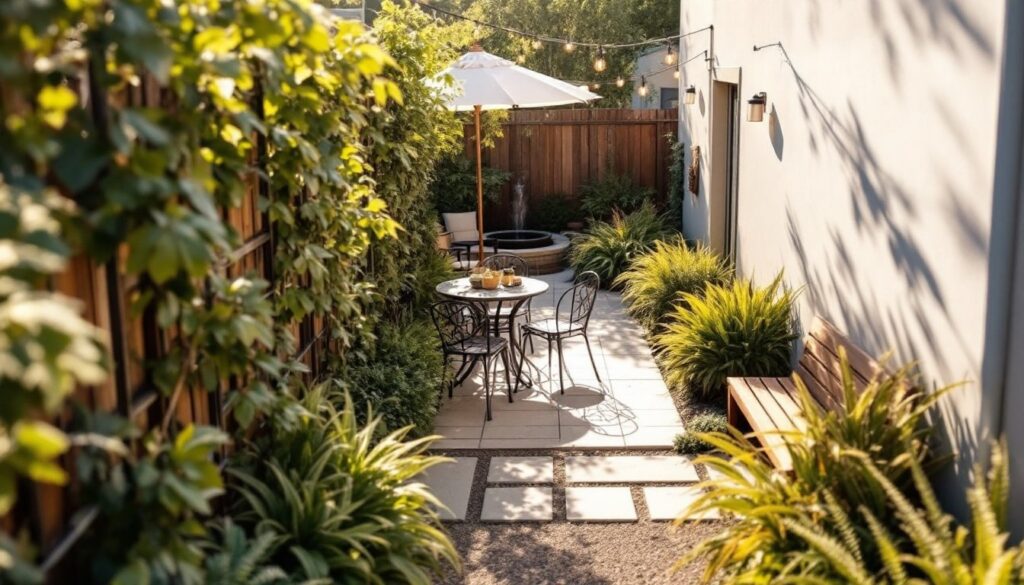
A long, narrow backyard can feel like wasted space, too thin for a proper seating area, too linear to feel inviting. But constraint breeds creativity. Rather than lamenting the footprint, smart homeowners are turning those skinny yards into multi-functional outdoor rooms that feel spacious, intentional, and genuinely enjoyable. By layering vertical elements, defining distinct zones, and directing the eye strategically, even a pencil-thin lot becomes a place where families gather, relax, and entertain. Here’s how to unlock your narrow backyard’s potential.
Table of Contents
ToggleKey Takeaways
- Vertical gardens and climbing plants draw the eye upward, making narrow backyards feel taller and less claustrophobic while maximizing limited ground space.
- Long narrow backyard ideas thrive when you define distinct zones using hardscaping elements like pavers, gravel, and raised beds, transforming a featureless strip into an organized, functional outdoor room.
- Choose slim-profile furniture such as bench seating and narrow dining tables sized for your yard’s width, paired with flexible folding pieces that free up walkway space when not in use.
- Strategic lighting with string lights and pathway LEDs guides foot traffic, enhances visual flow, and draws the eye upward to visually shorten long sight lines.
- Incorporate a small water feature like a recirculating fountain or narrow raised pond to mask neighbor noise and add auditory interest without dominating tight spaces.
- Repeat 3–5 signature plants throughout your design rather than scattering numerous species to create cohesion and make your narrow yard feel intentional and well-planned.
Vertical Gardens And Climbing Plants
When ground space is at a premium, grow up instead of out. Vertical gardens pull the eye upward, making a narrow yard feel taller and less claustrophobic. Install trellises, pergolas, or wall-mounted planters along one or both sides of your yard to frame the space and create visual interest without consuming floor area.
Create Depth With Strategic Plant Placement
Place taller climbing vines like clematis, jasmine, or climbing hydrangea toward the rear of your yard, and shorter ornamentals in front. This layering creates a sense of depth that makes the space feel longer than it actually is. Climbing plants also soften hardscape edges and provide privacy from neighbors, a major win for narrow yards squeezed between properties.
Choose plants suited to your growing zone and sunlight conditions. Most climbing vines need full sun (6+ hours) or partial shade, depending on the variety. Allow them one to two growing seasons to establish before they fill in a trellis. Living walls and green screens aren’t just decorative: they improve air quality and provide wildlife habitat, turning a functional necessity into an ecological asset.
Install sturdy galvanized or stainless-steel trellises rated for your region’s wind loads and the mature weight of your plants. Fasten them securely to posts or existing structures with lag bolts or construction adhesive rated for your material. A wobbly trellis will fail within a season and risk injury.
Define Zones With Hardscaping Features
Divide your narrow yard into distinct, purposeful zones, a lounge area, dining spot, play zone, or garden bed, using hardscaping. Rather than one open expanse, multiple defined spaces feel more organized and actually maximize usable square footage.
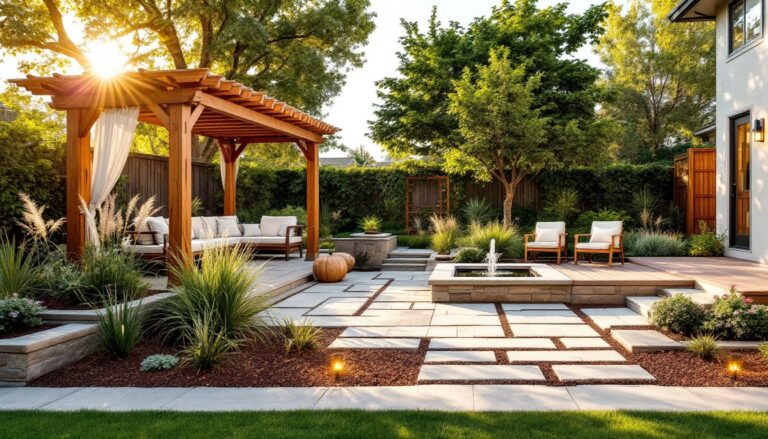
Use pavers, gravel, composite decking, or stamped concrete to visually separate zones. A simple 4×8-foot patio for a small seating area, a narrow 3-foot-wide pathway, and a garden strip require only basic installation but create structure. Pavers should be set over a compacted base (4 inches of gravel, sand layer, and landscape fabric) to prevent settling and weed growth.
Alternatively, raised beds (10–18 inches tall, made from composite boards or rot-resistant cedar) serve as both garden and visual dividers. They warm up faster in spring, allow better drainage control, and are easier on the back during planting. Budget roughly $150–$400 per 4×8-foot raised bed, depending on material grade and soil fill.
Edging matters too. Low borders of metal or composite separate patio from lawn and keep mulch in place, preventing creep and maintenance headaches. This attention to delineation transforms a featureless strip into a planned landscape that feels intentional and cared-for. Combining multiple hardscaping materials, say, a paver patio with a gravel border and a composite deck, adds visual rhythm without overwhelming a narrow footprint.
Outdoor Seating And Dining Solutions
A narrow yard demands flexible, space-efficient furniture. Forget bulky lounge sets: opt for slim-profile pieces that don’t dominate the visual landscape.
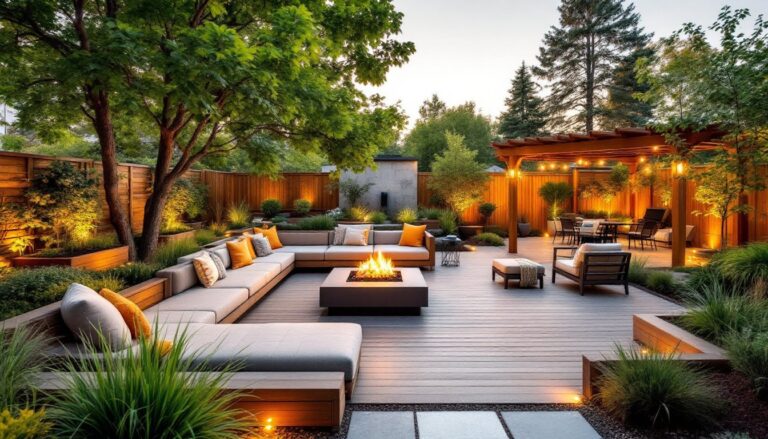
Bench seating runs the length of a wall and doubles as storage underneath (ideal for cushions, toys, or garden tools). A 6-foot bench takes up just 18–24 inches of depth. Pair it with a small bistro table or side table for drinks and a lamp, and you’ve created an intimate nook without a bloated footprint. Build your own from pressure-treated lumber (2x12s for the seat, 2x4s for the frame) if you’re comfortable with basic construction, or buy a readymade teak or metal frame.
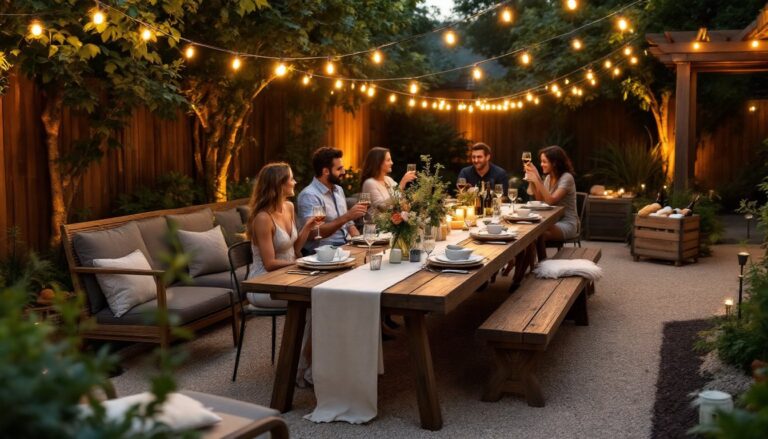
Dining tables work best at the widest part of your yard. A narrow 30-inch-wide farm table or bistro set seats 4–6 people in roughly 4×6 feet. Avoid round tables in linear spaces: they waste corners. Rectangular and semi-circular shapes align better with a narrow footprint.
Consider folding or nesting furniture for true flexibility, chairs and tables that tuck away when not in use, freeing up walkway space. Metal furniture (aluminum, wrought iron) is lighter than wood and requires less maintenance. Cushions should be rated UV-resistant and mold-resistant: look for Sunbrella or equivalent fabric grades.
A small backyard entertaining area benefits immensely from multipurpose seating. Think built-in seating along pathways or half-height walls that invite people to linger without requiring dedicated furniture.
Lighting And Pathways To Enhance Visual Flow
Lighting transforms a narrow yard from awkward to atmospheric, especially in evening hours. It also guides foot traffic safely and defines zones without clunky signage.
String lights or café lights strung overhead create canopy effect and draw the eye upward, visually shortening a long sight line. Solar-powered options eliminate wiring hassles and running costs, install them in under an hour. Ensure they’re rated IP65 or higher for moisture resistance and certified for outdoor use.
Path lighting, low-voltage LED spotlights or stake lights spaced 3–4 feet apart, guides movement and prevents trip hazards. These should be on a low-voltage circuit (12V) rather than line voltage (120V) for safety and ease of DIY installation. Solar pathway lights are the simplest retrofit and cost $15–$40 per unit.
Uplighting on plants, walls, or architectural features adds dimension and focuses attention on key design elements. A single uplighter on a climbing vine can make it pop at dusk. Avoid over-lighting: a few well-placed sources beat an evenly lit wasteland.
Pathways themselves deserve attention. A narrow backyard design benefits from a deliberate main pathway that runs the length of the yard at 2–3 feet wide, flanked by planting on either side. This guides visitors through the space and makes them feel like they’re on a journey, not trapped in a corridor. Decomposed granite or mulch paths are inexpensive to install and easy to adjust: paver or stone paths feel more permanent and require proper base preparation. Keep edges clean with metal or composite edging to prevent sprawl.
Water Features And Small-Scale Landscaping
A small water feature, a birdbath, recirculating fountain, or shallow pond, adds auditory and visual interest without dominating a tight space. The sound of water masks street noise and neighbor sounds, a huge benefit in urban or suburban narrow yards.
Recirculating fountains (tabletop or pedestal-style) run off a small pump that recycles water: no plumbing required. Installation takes 30 minutes: set it on a level patio, fill the basin, plug in the pump, and go. Maintenance involves topping off water every few days and cleaning the pump intake quarterly to prevent algae buildup. Budget $150–$500 for a quality unit that won’t corrode within two seasons.
Narrow raised ponds (24–36 inches wide, any length) work brilliantly in linear yards. A fiberglass or rubber-lined basin with a marginal shelf for shallow plants and a deeper zone for fish creates a focal point. Add a small pump and filter, and you’ve got a living water garden that attracts birds and insects. This is a weekend project if you’re comfortable with basic excavation and plumbing fittings: otherwise, hire a landscape contractor specializing in water features.
Small-scale landscaping means restraint. Choose 3–5 signature plants and repeat them throughout, rather than scattering 15 different species. This creates cohesion and makes a narrow space feel intentional. Grasses (ornamental varieties like fountain grass or maiden grass) add movement and height without bulk. Hostas, ferns, or shade-tolerant perennials work in shadier yards. Small backyard entertaining ideas often pair lush plantings with open gathering space, so balance green coverage with walkable area. Design resources like Gardenista showcase real narrow-yard transformations that prove constraint breeds ingenuity.
Conclusion
A long, narrow backyard isn’t a liability, it’s a blank canvas for thoughtful design. By stacking vertical gardens, zoning with hardscaping, choosing right-sized furniture, layering light, and anchoring the space with water or focal-point plantings, you transform that skinny lot into an outdoor room that works harder and feels larger than its footprint suggests. Start with one or two elements, let them settle and mature, then add others. The best yards evolve over time, shaped by use and feedback rather than executed in one grand weekend. Your narrow backyard can absolutely become the gathering place your home deserves.